Berean Standard Bible · public domain. More versions and languages in the Reading Plan.
1 Corinthians 11
Order in Worship and the Lord's Supper
This chapter addresses two key issues: appropriate conduct in worship and the proper observance of the Lord's Supper. Paul emphasizes maintaining order and reverence in worship to reflect the glory of God, the unity of believers, and the sanctity of Christ's sacrifice.
Event Description
Paul discusses cultural practices regarding head coverings during worship. He emphasizes the importance of honoring God's design for relationships and authority. In the cultural context of Corinth, women covering their heads during worship symbolized humility and respect, while men uncovered their heads to reflect honor to God. Paul reminds the church that worship should reflect God's order and bring Him glory.
Central Themes
God's Order in Worship: Paul upholds distinctions in roles while emphasizing equality in Christ.
Cultural Sensitivity in Worship: Practices should reflect reverence to God and avoid dishonoring others within the context of the culture.
Cultural & Historical Context
Corinthian Culture: In first-century Corinth, head coverings were a sign of modesty and submission, while uncovered heads could be seen as rebellious or disrespectful. Cross-References: Galatians 3:28 affirms equality in Christ, even as distinctions in roles remain.
"Nevertheless, in the Lord, woman is not independent of man, nor is man independent of woman. For as woman came from man, so also man is born of woman. But everything comes from God." (1 Corinthians 11:11-12)
Head Coverings in Worship
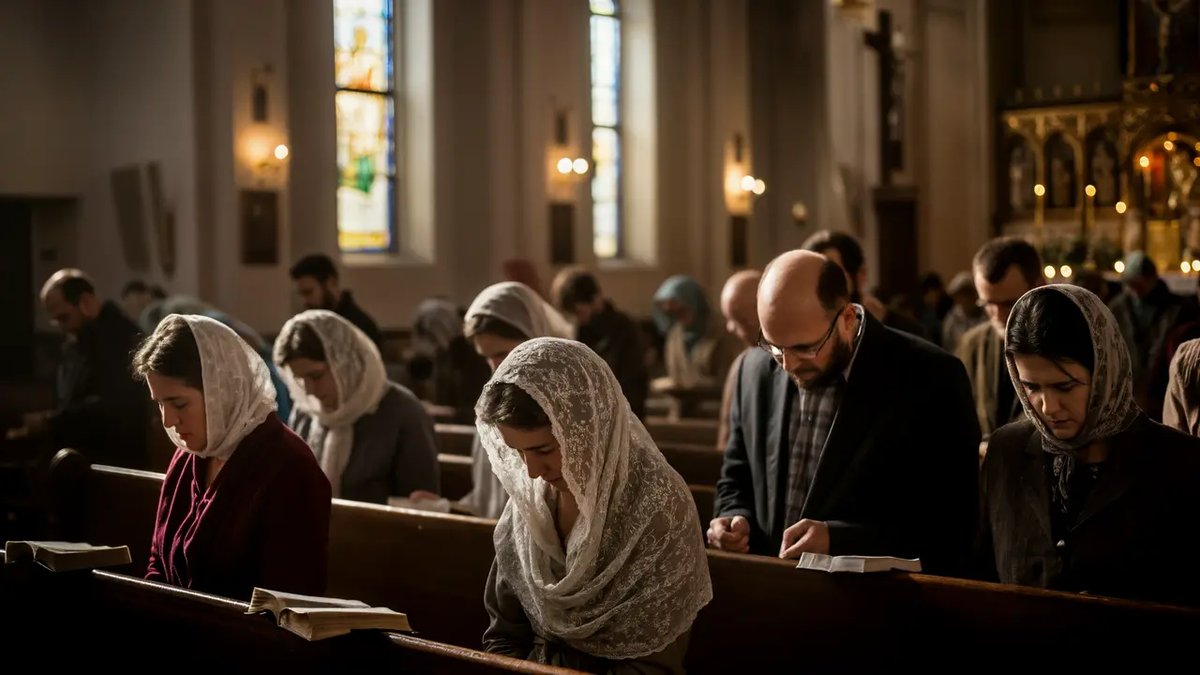
A serene worship scene where men and women pray and sing together in reverence, reflecting God's order and harmony. The women's covered heads and the men's uncovered heads symbolize humility and honor before God.
Correcting Abuse of the Lord's Supper
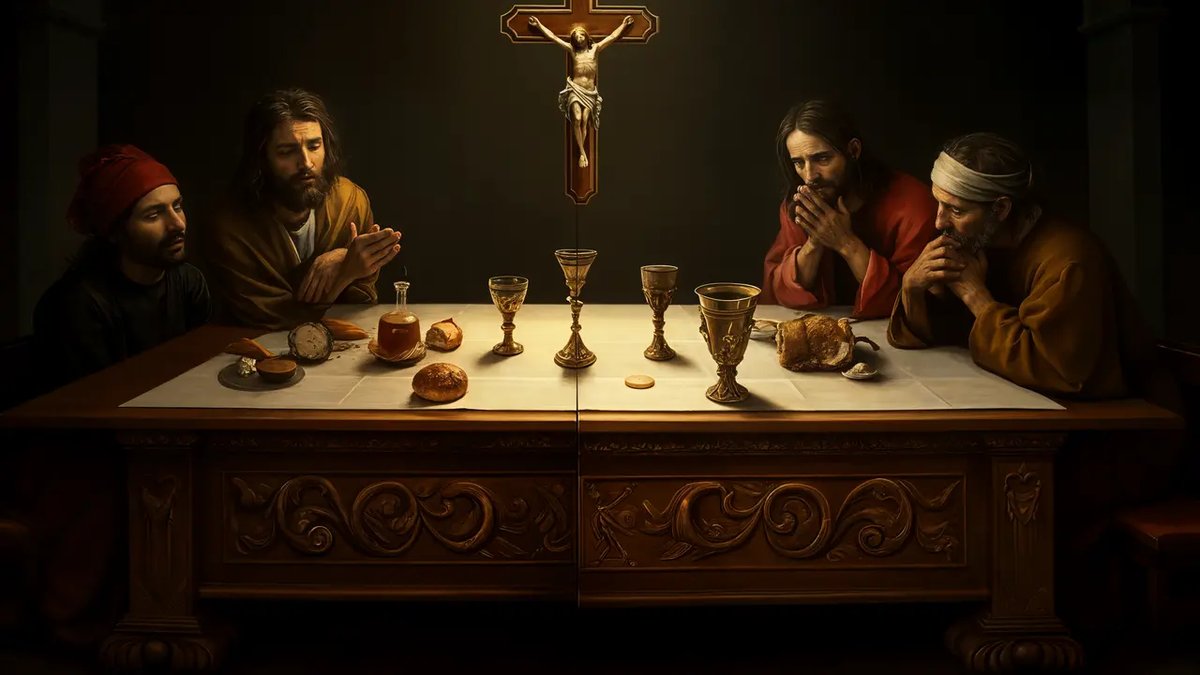
A divided table: one side overflowing with food and drink, with wealthy participants indulging; the other side sparse and somber, with the poor left out. In the center, Christ's broken body and shed blood shine as a reminder of unity.
The Institution of the Lord's Supper

A glowing table with bread and a cup at its center, surrounded by light symbolizing Christ's presence. A banner above reads, "Do this in remembrance of me."
Self-Examination and Worthy Participation
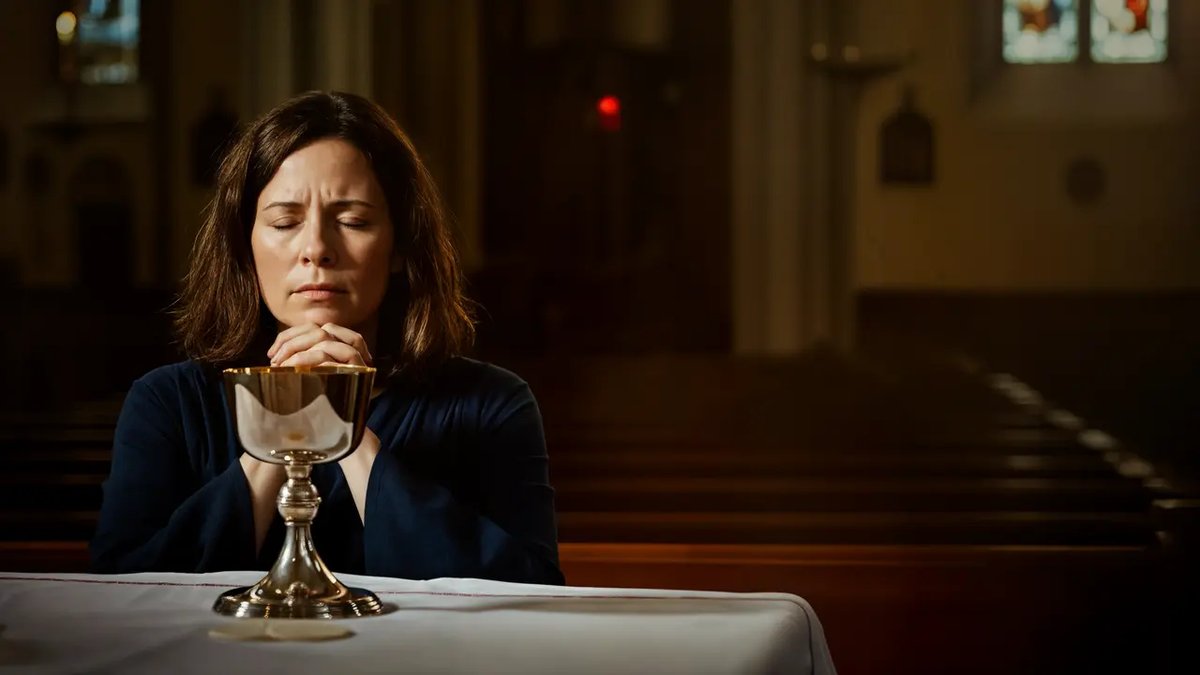
A believer kneeling in prayer before partaking of communion, their reflection in the cup revealing Christ's sacrifice, symbolizing self-examination and reverence.
At the Table of Grace
Come to the table, the Lord has prepared, A feast of His mercy, His love to be shared. We gather as one, His body, His bride, In Christ, our salvation, we all abide.
Search deep in your heart, let the Spirit reveal, Confess and be cleansed, let His mercy heal. Approach with reverence, His sacrifice near, For Christ gave it all, His love draws us here.
At the table of grace, we remember His name, His body was broken, His blood bore our shame. In the bread and the cup, His love we embrace, Proclaiming His death till we see His face.
One cup, one bread, one body in love, United as one, by the Spirit above. In remembrance we come, in worship we stay, At the table of grace, He shows us the way.
At the table of grace, let our hearts be made new, In the love of our Savior, so faithful and true.
Reflect on your heart and relationships before participating in communion, confessing sin and seeking reconciliation where needed.
Approach worship with humility and reverence, honoring God's order and purpose.
Foster unity in your church, ensuring that worship and fellowship reflect love, equality, and Christ's sacrifice.
Celebrate the Lord's Supper as a time of shared remembrance and proclamation of the gospel.
Support churches around the world in preserving the sacredness of communion as a testimony of Christ's sacrifice.
Emphasize the unity of believers globally as one body in Christ, celebrating His work in all cultures and nations.
1 Corinthians 11 challenges believers to approach worship and the Lord's Supper with reverence, humility, and love. Paul calls for unity, self-examination, and a focus on Christ's sacrifice, reminding us that the Lord's Supper is both a proclamation of the gospel and a reflection of our unity as His body. In all things, we are to worship and live for His glory, honoring Him in our conduct and our hearts.