Eternal Echoes
Read · Listen · Study
1 Corinthians 14 · Berean Standard Bible
1Earnestly pursue love and eagerly desire spiritual gifts, especially the gift of prophecy. 2For he who speaks in a tongue does not speak to men, but to God. Indeed, no one understands him; he utters mysteries in the Spirit. 3But he who prophesies speaks to men for their edification, encouragement, and comfort. 4The one who speaks in a tongue edifies himself, but the one who prophesies edifies the church. 5I wish that all of you could speak in tongues, but I would rather have you prophesy. He who prophesies is greater than one who speaks in tongues, unless he interprets so that the church may be edified. 6Now, brothers, if I come to you speaking in tongues, how will I benefit you, unless I bring you some revelation or knowledge or prophecy or teaching? 7Even in the case of lifeless instruments, such as the flute or harp, how will anyone recognize the tune they are playing unless the notes are distinct? 8Again, if the trumpet sounds a muffled call, who will prepare for battle? 9So it is with you. Unless you speak intelligible words with your tongue, how will anyone know what you are saying? You will just be speaking into the air. 10Assuredly, there are many different languages in the world, yet none of them is without meaning. 11If, then, I do not know the meaning of someone’s language, I am a foreigner to the speaker, and he is a foreigner to me. 12It is the same with you. Since you are eager to have spiritual gifts, strive to excel in gifts that build up the church. 13Therefore, the one who speaks in a tongue should pray that he may interpret. 14For if I pray in a tongue, my spirit prays, but my mind is unfruitful. 15What then shall I do? I will pray with my spirit, but I will also pray with my mind. I will sing with my spirit, but I will also sing with my mind. 16Otherwise, if you speak a blessing in spirit, how can someone who is uninstructed say “Amen” to your thanksgiving, since he does not know what you are saying? 17You may be giving thanks well enough, but the other one is not edified. 18I thank God that I speak in tongues more than all of you. 19But in the church, I would rather speak five coherent words to instruct others than ten thousand words in a tongue. 20Brothers, stop thinking like children. In regard to evil be infants, but in your thinking be mature. 21It is written in the Law: “By strange tongues and foreign lips I will speak to this people, but even then they will not listen to Me, says the Lord.” 22Tongues, then, are a sign, not for believers, but for unbelievers. Prophecy, however, is for believers, not for unbelievers. 23So if the whole church comes together and everyone speaks in tongues, and some who are uninstructed or some unbelievers come in, will they not say that you are out of your minds? 24But if an unbeliever or uninstructed person comes in while everyone is prophesying, he will be convicted and called to account by all, 25and the secrets of his heart will be made known. So he will fall facedown and worship God, proclaiming, “God is truly among you!” 26What then shall we say, brothers? When you come together, everyone has a psalm or a teaching, a revelation, a tongue, or an interpretation. All of these must be done to build up the church. 27If anyone speaks in a tongue, two, or at most three, should speak in turn, and someone must interpret. 28But if there is no interpreter, he should remain silent in the church and speak only to himself and God. 29Two or three prophets should speak, and the others should weigh carefully what is said. 30And if a revelation comes to someone who is seated, the first speaker should stop. 31For you can all prophesy in turn so that everyone may be instructed and encouraged. 32The spirits of prophets are subject to prophets. 33For God is not a God of disorder, but of peace—as in all the churches of the saints. 34Women are to be silent in the churches. They are not permitted to speak, but must be in submission, as the law says. 35If they wish to inquire about something, they are to ask their own husbands at home; for it is dishonorable for a woman to speak in the church. 36Did the word of God originate with you? Or are you the only ones it has reached? 37If anyone considers himself a prophet or spiritual person, let him acknowledge that what I am writing you is the Lord’s command. 38But if anyone ignores this, he himself will be ignored. 39So, my brothers, be eager to prophesy, and do not forbid speaking in tongues. 40But everything must be done in a proper and orderly manner.

Berean Standard Bible · public domain. More versions and languages in the Reading Plan.

1 Corinthians

1 Corinthians 14

Orderly Worship and the Purpose of Spiritual Gifts

✦
Objective

Paul continues his teaching on spiritual gifts, focusing on prophecy and speaking in tongues. He emphasizes that gifts should be used to edify the church and maintain order in worship. This chapter balances the expression of spiritual gifts with the need for clarity, mutual encouragement, and reverence in communal worship.

Detailed Analysis

Event Description

Paul urges the Corinthians to pursue love and desire spiritual gifts, especially prophecy. He explains that speaking in tongues edifies the individual unless interpreted, while prophecy edifies the entire church by instructing and encouraging others. Paul shares his appreciation for the gift of tongues but prioritizes clear communication that builds up the congregation.

Central Themes

Edification of the Church: Spiritual gifts should benefit the community, not just the individual.

Clarity in Worship: Prophecy, which is understandable and instructional, is preferred over uninterpreted tongues in public worship.

Cultural & Historical Context

Corinthian Culture: The Corinthians prized tongues as a dramatic and mystical gift, but Paul reorients their focus to the communal good. Cross-References: Acts 2:4-11 demonstrates how tongues can serve as a sign to unbelievers when understood.

Key Verse

"But the one who prophesies speaks to people for their strengthening, encouraging, and comfort." (1 Corinthians 14:3)

Vivid Artistic Descriptions

The Superiority of Prophecy over Tongues
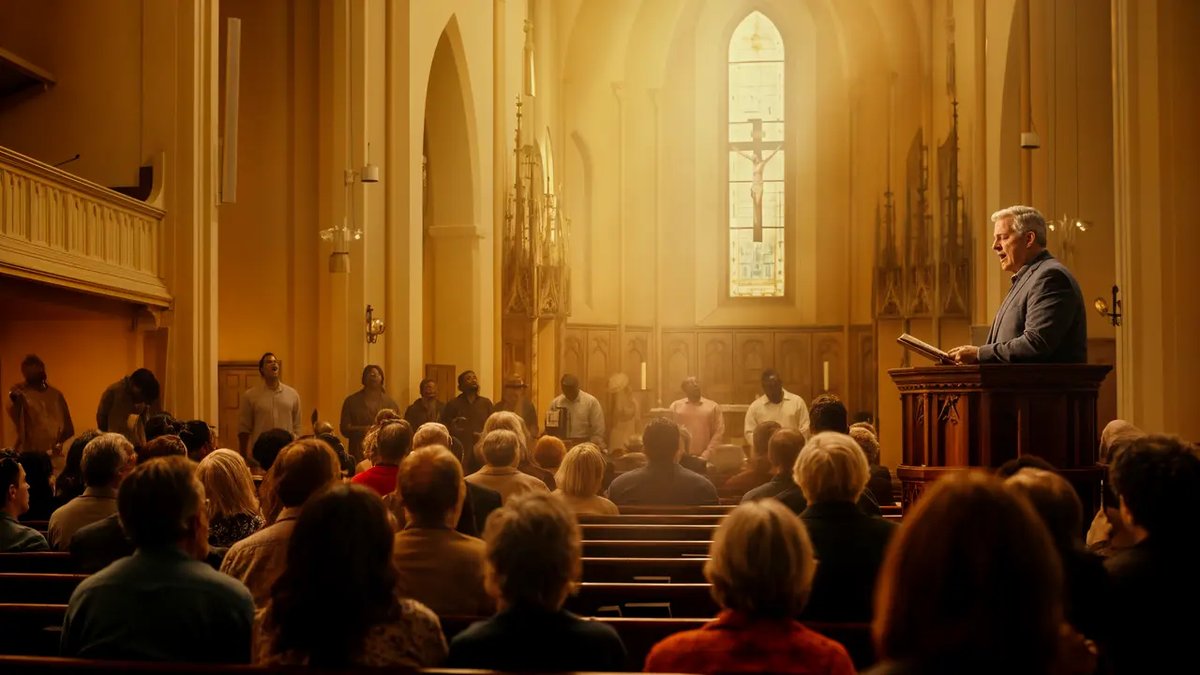
The Superiority of Prophecy over Tongues

A vibrant church gathering where some speak in tongues, creating a sound like distant thunderclouds. Nearby, a prophet speaks words of light and clarity, causing the congregation to lean forward, encouraged and inspired.

Tongues as a Sign and Prophecy for Edification
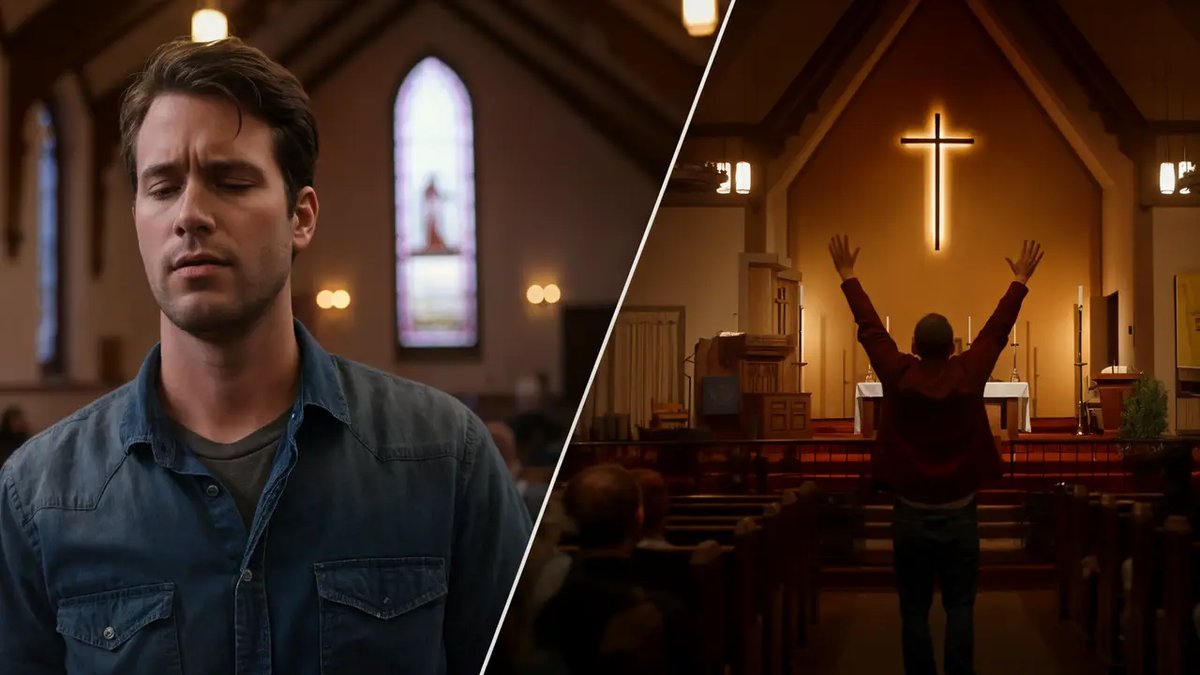
Tongues as a Sign and Prophecy for Edification

Two scenarios side by side: in one, a visitor in the church is confused and alienated by unintelligible speech; in the other, the same visitor is brought to their knees in awe as prophecy reveals God's truth.

Order in Worship
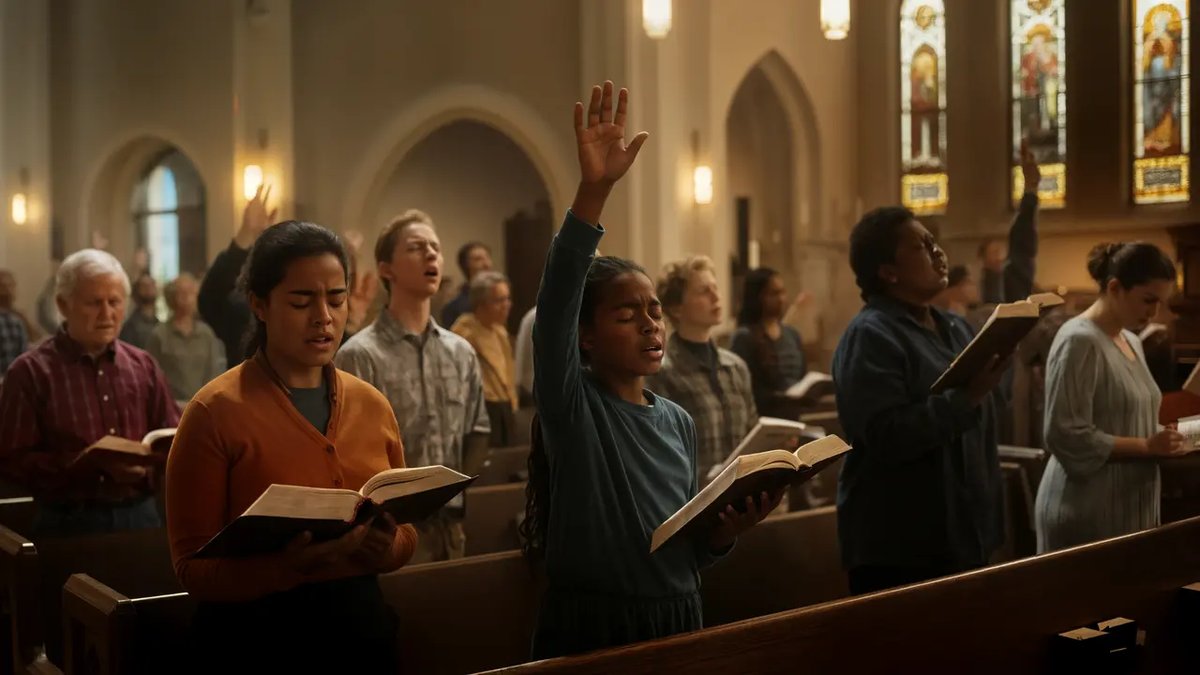
Order in Worship

A beautifully orchestrated scene of worship where individuals take turns contributing--a hymn sung, a teaching shared, a prayer offered--while the Spirit's presence moves gracefully among them, fostering peace and unity.

Song

God of Order, God of Peace

Verse 1

Gifts from above, by the Spirit's hand, Given for love, to build and to stand. Prophetic truth, clear as the day, Leads hearts to Christ, the only way.

Verse 2

Tongues may resound, a heavenly grace. But clearer still, Your truth must shine, Prophetic love, in every line.

Chorus

God of order, God of peace, Let chaos and confusion cease. In every word, in every song, Let Your Spirit guide us strong.

Bridge

Teach us, Lord, to worship well, To speak Your truth, Your love to tell. Let peace and order show Your face, A holy God in sacred space.

Outro

With hearts aligned, Your glory shown, We lift You high, and You alone.

Practical Application
Personal Life

Seek to use your spiritual gifts in ways that encourage and build up others, prioritizing clarity and love.

Reflect on how your actions and words in worship reveal God's character of peace and order.

Community & Society

Foster a culture of mutual respect and participation in your church, encouraging everyone to contribute to the life of the body in a way that honors Christ.

Encourage clear communication in worship and ministry, ensuring that all people--believers and seekers--can encounter God's truth.

Global Perspective

Support churches worldwide in creating worship environments that are culturally relevant yet rooted in biblical principles of order, peace, and edification.

Pray for unity and clarity in global worship practices, especially where cultural or linguistic differences pose challenges.

Conclusion

1 Corinthians 14 emphasizes the balance between freedom and order in worship. Spiritual gifts, especially prophecy and tongues, should be exercised in love, with a focus on building up the church and revealing God's truth. Worship that reflects God's character--peaceful, clear, and edifying--draws believers closer to Him and serves as a powerful witness to unbelievers. Paul's teaching calls us to a higher standard of worship that glorifies God and strengthens His body, the church.